

Say I’m crazy, but my kitchen can opener whirrs to Bb and might change pitches with each new can. My Betty Crocker blender is a more independent and versatile player in that it whirrs in several keys. My Epson printer emits vocal tones and word phrases with each new document it prints. And don’t get me started on my auto windshield wipers which have kept me in the creative flow as well as the traffic flow through many long rides home from gigs.
Music has been my saving grace, the thread running through every aspect of my challenging life. I learned to reframe what might be scary, boring and annoying. We are all Powerful with a capitol P when we use the enormous potential of our minds. And the reframe, with or without music, along with creative visualizing is a multipurpose tool.
I’ll never forget a reframe I created in 1993, the year the Celestine Prophecy by James Redfield was the book to read for anyone big into a spiritual journey or just curious to find out what was it that could keep a book on the bestseller list for 165 weeks!
I was on a 300 mile, five-hour trip home to Matawan from Utica, NY. It rained all the way. Looking back, I’m fortunate I made it home alive, for I was hypnotized by the rain and the windshield wipers. Both spoke to me and managed my creative flow. During that non-stop trip I spontaneously “wrote” in my head an entire “Broadway” show with six songs based on Redfield’s book. It was “Celestine Prophecy the Musical.” The ideas just poured out of me as powerful as the driving rain; lyrics, melodies and storyline. I think an experience like that is called a miracle. (It doesn’t matter if it wasn’t good. It got me home!)
In no time, I was back in my driveway. It seemed like I was only on the road for an hour! The unconscious mind is a funny thing. I’m a clinical hypnotist and I know that in a very relaxed state dramatic time distortion can occur. And people unknowingly, drive while hypnotized every day. My conscious mind re-engaged as I turned off the engine, and the entire musical---book and songs were lost. That was my first and last composition for the musical theater! And it taught me to always carry a recording device to capture my ideas.
At the hospital recently, I took advantage of my knack for finding music in everything to keep me calm in the MRI tube. I had many MRIs in the past, so I knew what to expect. Focusing on making music would take me away from the close quarters and the clanging and banging of the machine. The technicians always offer headphones and your favorite music radio station, but I’ve learned the sound you’ll get is mostly static, and static is, to me, more upsetting than the noise of the machine. Reframe to the rescue!
I closed my eyes and took myself to a music hall where a large salsa orchestra was playing. I was at the imaginary WBGO FM radio Latin Jazz Cruise. Listening to the clang and bang I found rhythm that would take me away from the reality that I was in an MRI tube for which I was too wide! As I recognized the repeating patterns of clangs and bangs, they became percussion instruments and exotic sounding drums and cymbals. As rhythms changed, my melodies changed. The tube was my playground for 35 minutes.
Composers and songwriters have always been inspired by sounds and sights in nature and experiences of everyday life. As for me, I feel a kinship with the great violinist Itzhak Perlman who found he could make music with his VitaMix blender. Enjoy here his video performance on blender filmed in his kitchen.



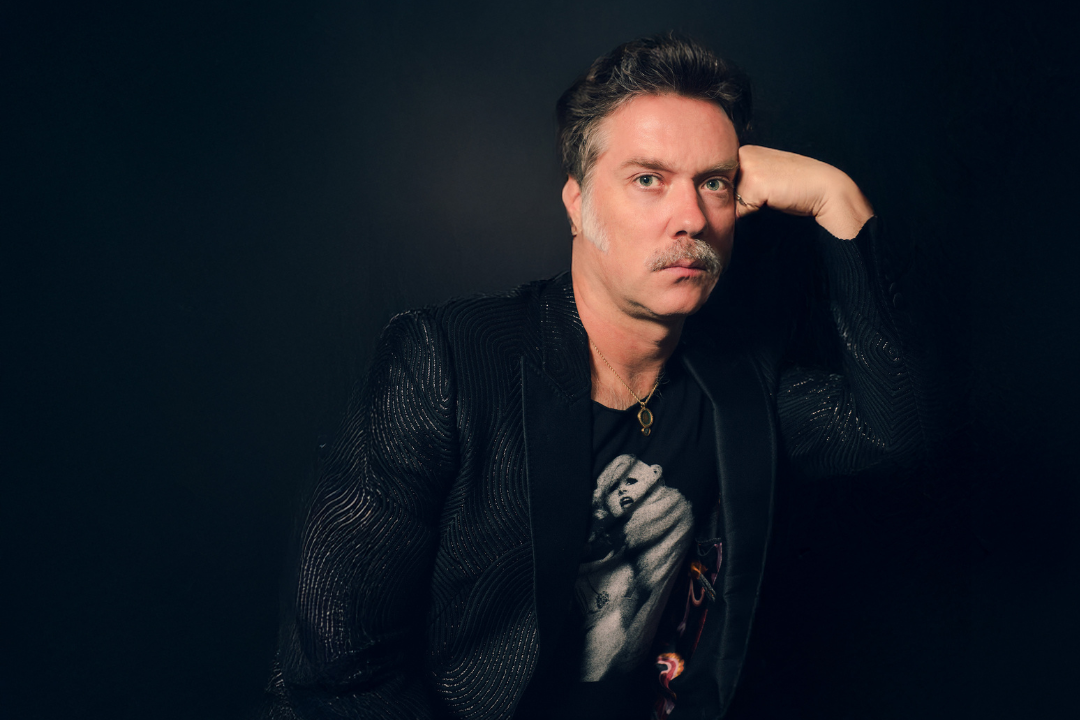
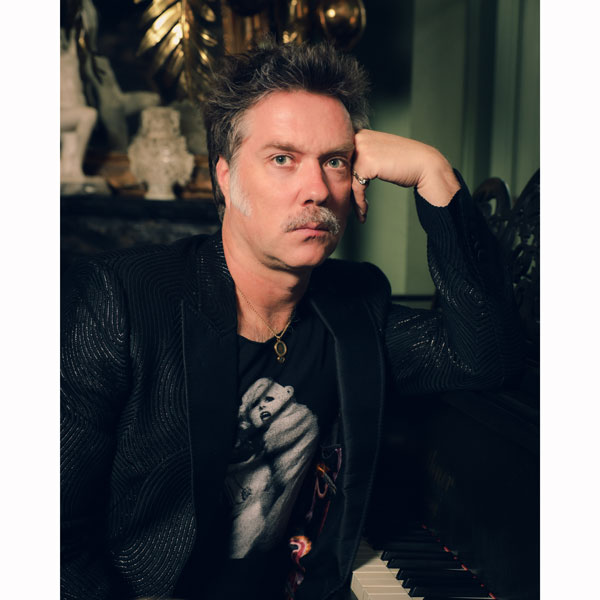
Praised as “the greatest songwriter on the planet,” by Sir Elton John, Rufus Wainwright joins the Princeton Playhouse Sinfonia for a special one-night-only engagement performing selections from his albums Rufus does Judy at Carnegie Hall and Want One, Want Two, and beyond. Princeton Playhouse Sinfonia is a dynamic new collaborative ensemble that brings together student musicians from Princeton University's Sinfonia, directed by Ruth Ochs, and Princeton Playhouse Orchestra, directed by Solon Snider Sway, alongside members of the Princeton Jazz Ensembles and local professional musicians.
On the mark of its 20th anniversary this year, Wainwright’s “Rufus Does Judy” is undoubtedly one of the most sensational shows from his incredible career, an exhilarating and loving recreation of Judy Garland’s infamous 1961 comeback concert. “Rufus Does Judy” made its premiere at Carnegie Hall in 2006 and garnered Wainwright’s first GRAMMY nomination for Best Traditional Pop Vocal Album. The full program has been performed globally including the London Palladium, Hollywood Bowl, Paris’ L'Olympia, and Toronto’s Luminato Festival. For the Colorado Symphony show, Wainwright will curate a special selection of his favorite songs from the album. 2026 will be the last time Rufus reprises this iconic show.
Rufus Wainwright’s Want One and Want Two have earned recognition as iconic albums worldwide, with Paste Magazine elevating Want One to the No. 1 album of the year, and Rolling Stone Magazine listing it in their top 5 best albums of 2003. Bowie hailed Wainwright’s song ‘Dinner at Eight’ as the “best father/son song he knew”. 22 years later, these songs have been given new life through lush symphonic arrangements by Sally Herbert (Woodkid, Florence + the Machine) and Max Moston (Antony and the Johnsons).
Combined in one program, these works form just a few of the many pillars of Rufus Wainwright’s extensive career—works that define his singular voice and fearless emotional range, merging vulnerability with spectacle, tradition with reinvention. Decades on, these songs continue to resonate as the foundation of Wainwright’s legacy.