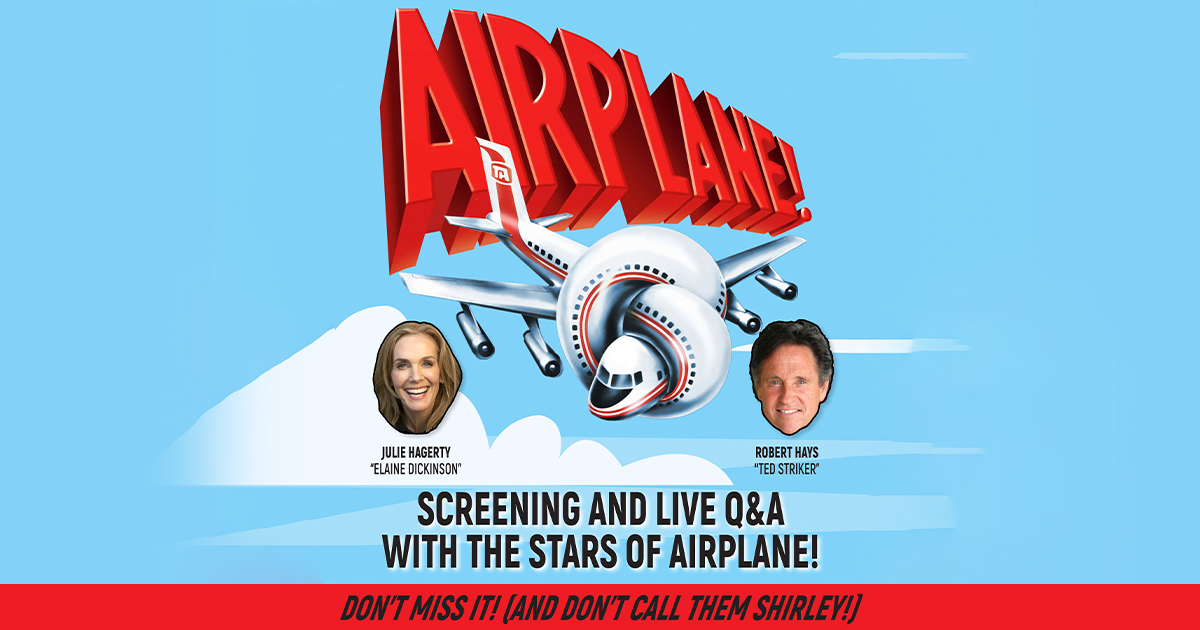

There are some things you need to know about the current glut of movie remakes, reboots, and sequels clogging up the theaters. Actually, you probably already know why -- because, money -- but there are some details to that understanding that deserve consideration.
I am not above getting worked up over the prospects of a beloved old favorite being dragged into service again. I was perturbed by the Poltergeist remake, and positively livid when it was announced that Dwayne "The Rock" Johnson was tapped to star in the remake of the John Carpenter cult favorite Big Trouble In Little China. I didn't think it could get worse at that point. Then Disney, which is quite possibly out to give the Whores Of Babylon a solid challenge, announced they were extracting the "Night On Bald Mountain" sequence from Fantasia and developing a live action movie based upon that. They'd already redone or revamped, in some degree, Alice In Wonderland, Sleeping Beauty (with Maleficent) and Cinderella, and were now going for broke.
Walt Disney's original vision for Fantasia was that it would be a traveling musical experience. Every year, the film would play in your town with some new segments dropped in and some older ones pulled out. It was a cinematic, animated experience, but it was made as a touring orchestra experience first and foremost. This announcement, in effect, pulls Uncle Walt's frozen head out of the cryogenic chamber and uses it as a bowling ball. Disney animation fans hold Fantasia as nearly sacrosanct, and this was akin to defiling a holy relic.
"Aren't you taking this rather harshly," you may ask. Or, "why don't you just watch the old one and ignore the new ones?" This oft-used chestnut, while helpful in its pragmatism, misses the greater picture. Money devoted to constantly rehashing the past is taken away from projects that are not franchise-ready, that are trying something new and different. It is, in a sense, the studios stealing from the present and future to keep reanimating the past, like a horrid Herbert West with his syringe of green goo. Why did we get here?
Nothing New - To say that this cycle of sequels, reboots, and remakes is some new animal is to deny the past we are seeking to raise up. Versions of a movie based on L. Frank Baum's Oz stories emerged long before The Wizard Of Oz came out and became a beloved Hollywood staple. Attempts have been made after it as well, but the shadow it casts is formidable, and its legacy is secure for the moment.
Yet the concept of "it worked once, let's do it again" has been a regular one among the filmmaking think tank types. What is different now from then is that the thought of going back to a previous property was a gamble, and studios knew it. The audiences were often cold to these retreads because they knew they were being fed reheated leftovers. Sometimes those leftovers proved to be so much better the second or third time around (again, see The Wizard of Oz), and the audience responded favorably. Money earned from these unsure "sure things" was funneled back into the system to develop new properties. This was not a business plan to be regurgitated endlessly.
Around the 1980s the big studios were in the middle of being acquired by bigger companies, and most of those were not in the entertainment business. They held assets. They had no vested interest in how the studios made the earnings -- only that they did. We see that decade as the one where sequel-itis is entrenched in the pop culture battlefield. Even so, relatively speaking, the sequels produced seemed to jibe with what audiences actually wanted, and while the companies were owned by banks, oil companies, and the like, the actual studios were still in control of the old movie men and some movie women. That's not the case today (see: Universal Comcast, Fox News Corp., Sony Pictures, etc. And women in high ranks at studios are still an exception and not the rule, as is with African American and Asian American executives, especially at Sony. This is another rant for another time.)
The sequel game wasn't prestigious though. Alongside movies like The Empire Strikes Back and Indiana Jones and the Last Crusade, you'll find the diminishing returns of a dozen Friday The 13th and Nightmare On Elm Street slashfests. Each Rocky film grew sadder, more cartoonish, and rather desperate for your love and attention. But they still made money, and that was a defining trigger. The curiosity alone drove audience attention, and recognition. You didn't have to market a sequel as hard as you did an entirely new property because people already recognized the frame. All the studios had to do was fill it.
Another thing that emerged in the '80s -- and seemingly has no relationship to this subject, but bear with me -- was colorization. You will remember that horrid practice of digitally painting in black and white movies because, as studios protested, "kids won't watch black and white because they don't like old." The technology was crude, with pastels dropped on top of figures and backgrounds without the true benefits of gradation. Because the early tracking software could not lock onto moving figures so well, the actor on-screen would move and their individual colors would follow behind them ever so slightly. It was, in the eyes of many, a squalid practice, but that belief that youth rejects anything that hints at being old remained.
Digital Revolutions - A few things moved the reboots/remakes/sequels juggernaut closer in the early-2000s. The first was straight nostalgia. Post-September 11, there was a brief desire to cling to things that once were, so people were actively seeking out stimuli that evoked nostalgia and sentimentality, and that meant the mining of childhood had begun in earnest. That also meant that things once too expensive or physically complex to create could now be accomplished. Coupled with an innate desire to see movies where the whole world edges close to oblivion, yet is saved by guardians from youth, the idea that you just had to pull on those particular memory wires to get the desired effect calcified further.
The Internet further complicated things as people pulled their eyes away from the newspapers and, to an extent, from advertising-based broadcast television. Getting people to see your commercial and learn your movie's concept was hard enough before. Now they weren't even watching. Just prior to 9-11, the marketing scheme of developing full websites for the benefit of selling a movie gained traction. This was notable with the sales of The Matrix, where such a complicated conceptual piece needed a bit of backstory. Short films were commissioned. Text pieces were written by authors like Neil Gaiman...this was an enterprise unto itself. When the two Matrix sequels came on the scene, all of that pipe-laying was unnecessary. The audience knew and the properties sold themselves. Bonus.
So traditional advertising wasn't helping like it used to, and marketing campaigns to subvert that original model were expensive and eating away at profit margins. What if we could sell movies people already knew enough about that we wouldn't have to tell them much?
Ding.
The final tier of this paradigm is interconnected with itself. With Internet sites devoted to the how well movies do as opposed to how good or bad movies may be, the kind of fiscal horserace once reserved to the pages of Variety have spilled out into the regular world. At one point it wouldn't have been a concern that the sequel Pitch Perfect 2 beat the reboot Mad Max: Fury Road at the box office. Now it is a crucial part of the narrative, albeit an unfair one. The Mad Max film was never going to rule the weekend with a hard "R" rating, and it made solid money for where it was, and did even better in the foreign markets. Yet it was deemed a loser in the horserace by the entertainment press, and as that perception hung on, the less likely it became for the movie to earn a second or third week bounce.
There's also a part that is wrapped up with selfie-culture. Yes, with the advent of the smartphone with camera functions, the movie you watched was important but seeing you there watching the movie seemingly became more important. The movie is a fashion statement. You need to see that movie on opening weekend or else you too are a loser. Get your picture in front of the marquee, in the lobby, in your seat. Post your picture to Instagram or Facebook to show you went to see the winner and not the loser. It's a rather twisted psychological game that is played out in theaters every Friday night.
How do you guarantee your movie will be the winner and not the loser, given that amount of pressure and lack of guidance and education you could have provided about your product? It is easier and cheaper to add a number to the next Transformers, or resurrect Godzilla or Batman or Spider-Man, or throw Chris Pratt into Indiana Jones' hat, leather jacket, and bullwhip than to attempt to explain away "the new." That doesn't mean that daring films like Ex Machina won't be made, but it guarantees they'll never be huge hits.
It won't reverse course anytime soon, either.
The Fix Is In - How do you get audiences to yearn for something new and to break this seemingly endless cycle? Steven Spielberg himself -- a person who takes some share of the blame for creating the beast in the first place -- asked the question last year at a film-oriented Q&A session. His response was that Hollywood needed to suffer a significant enough failure, expensive and embarrassing, to stigmatize the practice. He also predicted that it was coming sooner than anyone imagines.
Well, I hardly believe that, based on the five year projections of the studios' slates. What I see is a cinematic deja vu. However, Spielberg has a point. As DC Comics was struggling with trying to make Superman relevant again with a couple of cheap efforts (i/e Superman IV: The Quest For Peace springs feebly to mind), Marvel was getting their metaphorical knuckles rapped by the angry nuns of the critical establishment. Howard The Duck put off Marvel's formal entry into movie houses for nearly two decades. Heaven's Gate practically killed director Michael Cimino's career. Hollywood felt the chill of both occurrences in their times, and adapted accordingly. You could say, conversely, these bombs pushed studios even farther into remake/sequel territory.
What is required is that the audiences have to reject the films they're being told are the presumed winners of the week. Their desire to see a movie has to be greater than the desire to be seen at the movie. They have to grow up enough to believe they're not the story. With culture further narrowing to accomplish the opposite, making you the story all the time to stroke your ego and seduce your wallet open, that's unlikely.
So in the end, we may have to be satisfied with DVDs or digital streams of our favorite movies in our favorite configurations. We can no longer protect our cinematic icons from being revamped for the next generation, and the one after that. We'll just have to accept that Hollywood will give each person his or her own customized variation of a property, and we'll have to settle for it.
It's a profoundly sad statement that bows to mediocrity, but in the end, our favorite star is always ourselves, isn't it?