

While The ‘59 Sound seemed to embrace rock and roll history and highlight the artists that had influenced the band, American Slang was something completely different. Rather than pay homage to the past and repeat the formula that had worked so well in The ‘59 Sound, the band sought to make its own history. They accomplished this by combining their Jersey roots and punk influences. It’s as if Springsteen and The Clash recorded an album together at the height of the punk era.
American Slang also served notice that the band would never forget where it came from. Lyrics continued to immortalize the streets of New Brunswick just as Springsteen did with the streets of Asbury Park.
Now the lights go low on the avenue
And the cars pass by in the rain
University boys and the girls fill the bars
While I’m just waiting on the light to change
And the steam heat pours
From the bodies on the floor
Down in the basement
Where the Jacknives play
For the hub city girls
In the ribbons and the curls
Who know the meaning of staying out late
They know the meaning of staying out
Very, very late
-- “The Diamond Church Street Choir”
Highlights include “American Slang,” “Stay Lucky,” “Bring It On,” and “The Diamond Church Street Choir.”


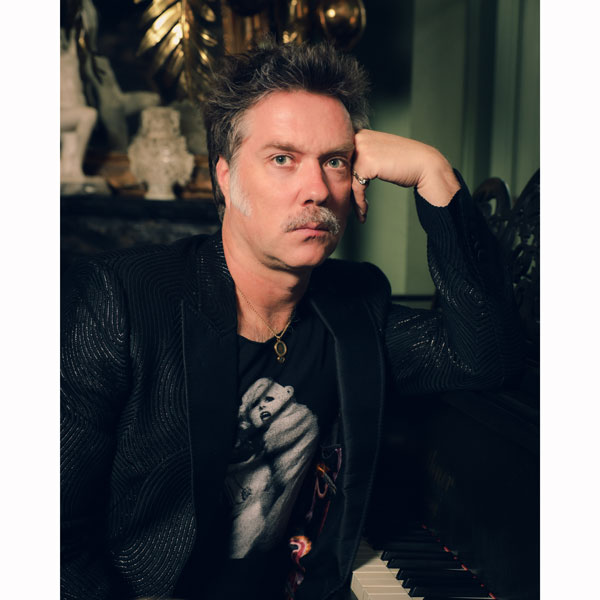
Praised as “the greatest songwriter on the planet,” by Sir Elton John, Rufus Wainwright joins the Princeton Playhouse Sinfonia for a special one-night-only engagement performing selections from his albums Rufus does Judy at Carnegie Hall and Want One, Want Two, and beyond. Princeton Playhouse Sinfonia is a dynamic new collaborative ensemble that brings together student musicians from Princeton University's Sinfonia, directed by Ruth Ochs, and Princeton Playhouse Orchestra, directed by Solon Snider Sway, alongside members of the Princeton Jazz Ensembles and local professional musicians.
On the mark of its 20th anniversary this year, Wainwright’s “Rufus Does Judy” is undoubtedly one of the most sensational shows from his incredible career, an exhilarating and loving recreation of Judy Garland’s infamous 1961 comeback concert. “Rufus Does Judy” made its premiere at Carnegie Hall in 2006 and garnered Wainwright’s first GRAMMY nomination for Best Traditional Pop Vocal Album. The full program has been performed globally including the London Palladium, Hollywood Bowl, Paris’ L'Olympia, and Toronto’s Luminato Festival. For the Colorado Symphony show, Wainwright will curate a special selection of his favorite songs from the album. 2026 will be the last time Rufus reprises this iconic show.
Rufus Wainwright’s Want One and Want Two have earned recognition as iconic albums worldwide, with Paste Magazine elevating Want One to the No. 1 album of the year, and Rolling Stone Magazine listing it in their top 5 best albums of 2003. Bowie hailed Wainwright’s song ‘Dinner at Eight’ as the “best father/son song he knew”. 22 years later, these songs have been given new life through lush symphonic arrangements by Sally Herbert (Woodkid, Florence + the Machine) and Max Moston (Antony and the Johnsons).
Combined in one program, these works form just a few of the many pillars of Rufus Wainwright’s extensive career—works that define his singular voice and fearless emotional range, merging vulnerability with spectacle, tradition with reinvention. Decades on, these songs continue to resonate as the foundation of Wainwright’s legacy.